
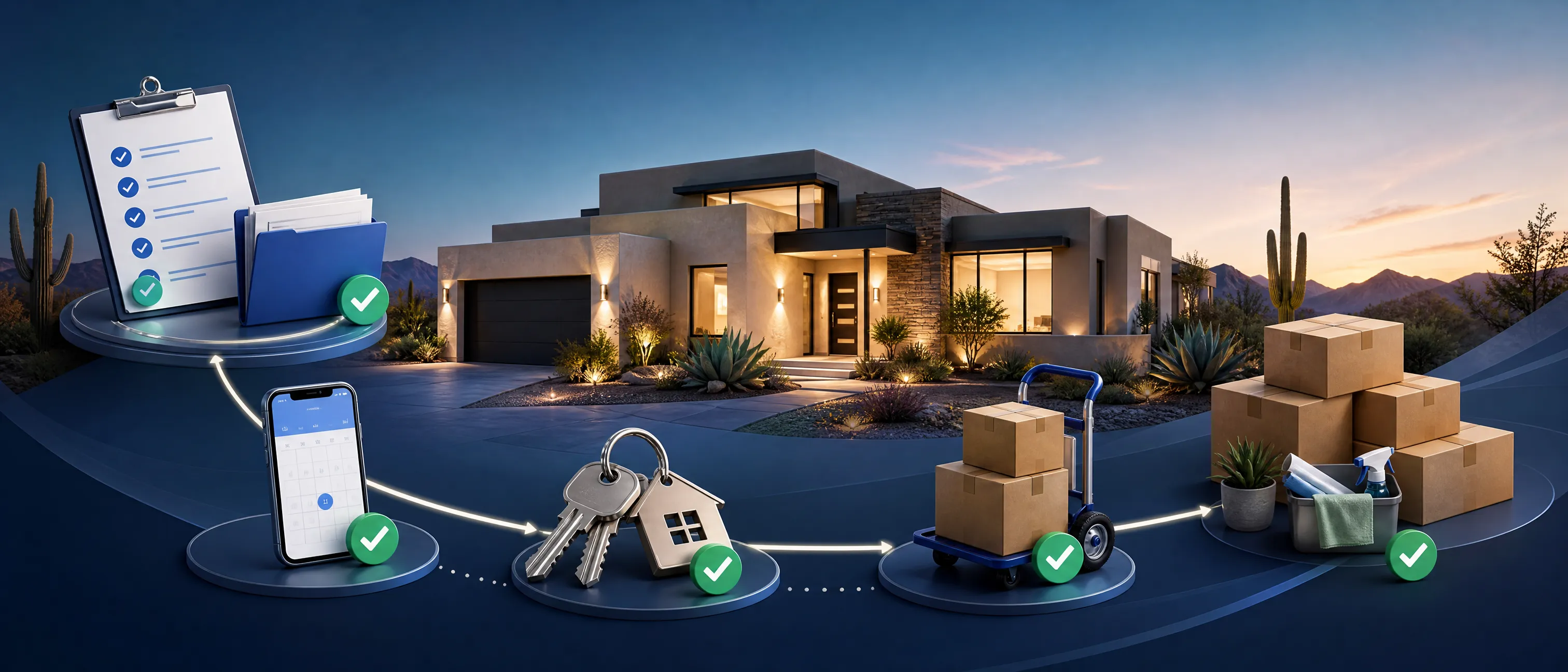
Home Buyer Moving & Closing Checklist
Connect lender, inspection, closing, utility, packing, possession, and move-in tasks in one plan.
Buying the home is only one part of the transition. Financing, inspections, insurance, utilities, packing, closing, possession, and the physical move all have to converge—often within a narrow window.
The safest approach is to treat your move as a coordinated timeline rather than a collection of last-minute errands. Use this checklist to stay organized while allowing room for the dates and conditions that can change during a real estate transaction.
1. Build your master timeline
Start with the dates in your purchase contract, then work backward from the expected closing and possession dates. Keep the plan flexible until your lender, escrow team, and agent confirm the necessary milestones.
- Record inspection, financing, appraisal, document, and closing deadlines.
- Identify the date you expect to receive possession—not merely the estimated closing date.
- Add packing, utility, cleaning, moving, and access appointments.
- Assign responsibility for every major task.
- Keep a short backup plan for a delayed closing or possession change.
Important: Avoid scheduling irreversible arrangements solely around an estimated closing date. Confirm timing with the professionals handling your transaction.
2. Protect the financing and closing process
Even after preapproval, financial changes can affect a loan. Stay responsive and avoid surprises during the final stretch.
- Answer lender and escrow requests promptly.
- Review deadlines and outstanding conditions with your agent and lender.
- Avoid opening new credit, financing furniture, moving large sums, or changing employment without lender guidance.
- Confirm homeowners insurance and any documents required for coverage.
- Verify the amount, method, and security instructions for funds needed at closing.
Wire fraud is a real risk. Independently verify wiring instructions using a trusted phone number before transferring money, and never rely solely on an unexpected email.
3. Complete inspections and property follow-up
The inspection period is not just a box to check. It is your opportunity to better understand the home, make informed decisions, and prepare for ownership.
- Attend inspections when appropriate and review the findings carefully.
- Discuss repair requests, credits, or other responses with your agent.
- Confirm the status of agreed-upon repairs and supporting documentation.
- Identify maintenance items that may become priorities after closing.
- Keep reports, receipts, warranties, and property documents together.
4. Plan the move by category
A household inventory makes it easier to estimate labor, equipment, packing materials, storage, and time. Sort before packing so you do not pay to move items you no longer want.
- Separate items into move, store, donate, sell, and discard categories.
- Identify fragile, oversized, specialty, or high-value belongings.
- Reserve movers, equipment, and packing help early enough for your preferred dates.
- Label boxes by room and priority rather than using vague descriptions.
- Keep identification, closing documents, medication, valuables, chargers, keys, and essential supplies with you.
Create a clearly marked first-night group with bedding, toiletries, basic tools, pet supplies, food, and anything needed before the main unpacking begins.
5. Transfer utilities, services, and your address
Schedule transfers early, but align activation with the actual possession terms. In the Tucson area, dependable electricity, water, and cooling deserve particular attention during warmer months.
- Arrange electric, gas, water, trash, internet, and other required services.
- Submit postal forwarding and update important accounts.
- Notify insurance providers, financial institutions, employers, schools, and subscriptions.
- Confirm HOA, gate, elevator, parking, or community access requirements.
- Save confirmation numbers and appointment windows in the master timeline.
6. Prepare for the final walkthrough and possession
The final walkthrough is typically your opportunity to confirm the property’s condition shortly before closing. It is not a substitute for an inspection.
- Review agreed-upon repairs and included personal property.
- Check that the home is in the expected condition.
- Confirm keys, remotes, access codes, mailbox information, and possession details.
- Document material concerns and raise them promptly with your agent.
- Coordinate cleaning and moving access so crews do not interfere with one another.
7. Handle the first days strategically
Do not try to perfect the entire home immediately. Begin with safety, access, utilities, and the rooms needed for normal daily life.
- Rekey or replace approved exterior locks.
- Locate the water shutoff, electrical panel, HVAC controls, and safety equipment.
- Verify smoke and carbon-monoxide alarms as applicable.
- Photograph immediate condition concerns before unpacking obscures them.
- Set up sleeping, bathroom, kitchen, work, child, and pet essentials first.
A more coordinated move
A smoother transition comes from connecting the transaction schedule to the household move. Clear Market Advantage can help qualifying buyers coordinate packing, moving, cleaning, rekeying, utility planning, and move-in support alongside the purchase timeline—reducing the number of separate vendors, calls, and handoffs competing for attention before closing.