
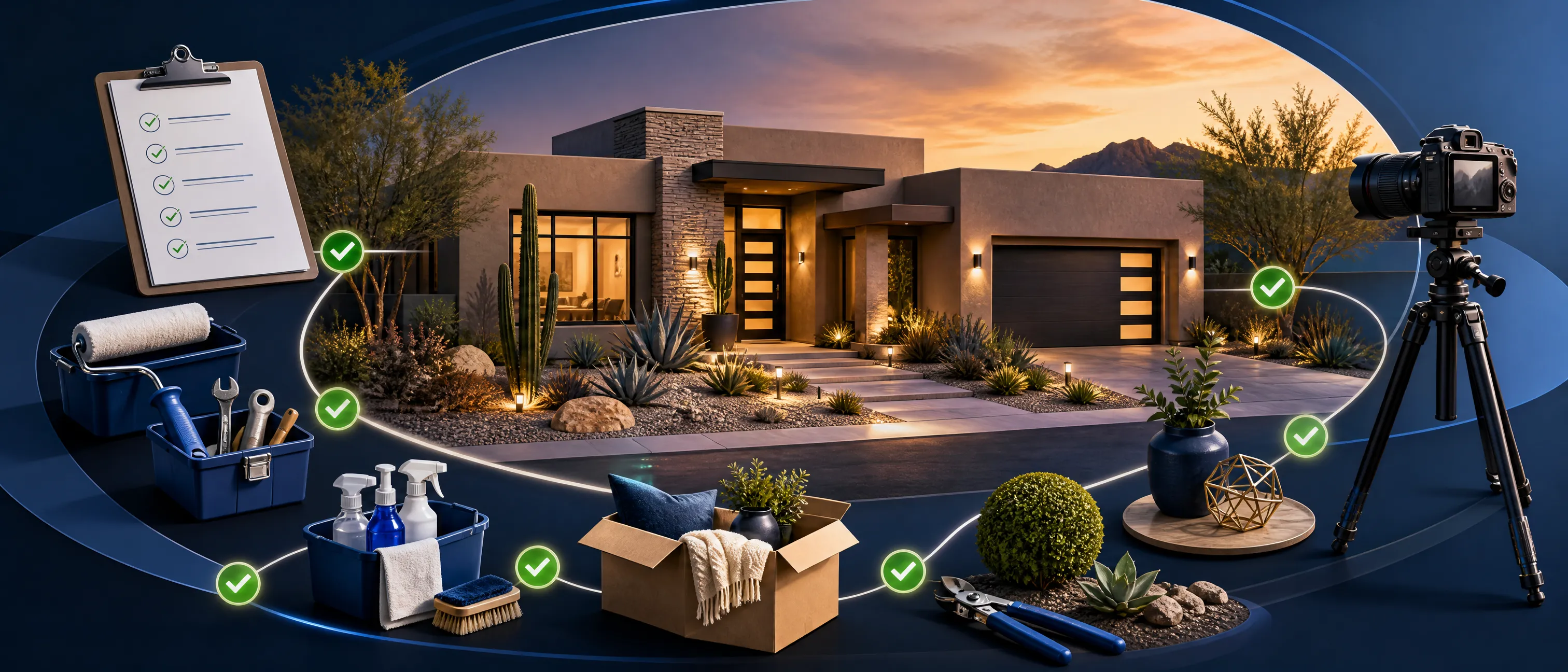
Seller's Listing Preparation Checklist
A room-by-room and milestone-based checklist for preparing a Tucson home for market.
Preparing a home for sale can quickly turn into an expensive, unfocused project. The goal is not to renovate everything. It is to identify the work that improves buyer confidence, strengthens presentation, supports financing, and helps the property reach the market on schedule.
Use this checklist as a decision framework. Every home is different, so prioritize tasks according to condition, price range, likely buyer expectations, market competition, available time, and expected return.
1. Define the strategy before starting the work
Preparation decisions should follow the listing strategy—not precede it. Begin with a walkthrough and a realistic view of the market.
- Clarify your selling goals, timing, and important constraints.
- Review competing listings and recent comparable sales.
- Identify the home’s strongest marketable advantages.
- Separate essential, recommended, and optional projects.
- Set target dates for completion, photography, launch, showings, and move-out.
A useful rule: Finish the work buyers are most likely to notice or question before spending money on improvements that may be largely invisible to them.
2. Triage repairs by risk and visibility
Small defects can create an outsized impression when buyers see several of them together. They may wonder what larger problems have been deferred. Start with safety and function, then address visible wear that weakens confidence.
- Check doors, windows, locks, gates, handles, and common hardware.
- Patch prominent drywall, baseboard, trim, and cabinet damage.
- Replace missing or damaged switch and receptacle plates where appropriate.
- Review peeling, flaking, stained, or heavily marked paint.
- Investigate active leaks, moisture, unusual odors, or electrical concerns.
- Direct licensed-trade work to properly qualified professionals.
Keep invoices, warranties, permits, and repair documentation organized. Buyers, inspectors, appraisers, escrow, or lenders may have questions later.
3. Declutter with the move in mind
Decluttering is not simply a staging exercise. It is the first phase of the move. Sorting early can reduce moving volume, improve photography, simplify showings, and prevent rushed decisions near closing.
- Create move, store, donate, sell, recycle, and discard categories.
- Reduce excess furniture so rooms feel functional and easy to navigate.
- Edit personal collections without stripping the home of all warmth.
- Organize closets, cabinets, garage areas, patios, and storage spaces.
- Remove sensitive documents, medication, valuables, and visible spare keys.
Buyers will often look inside storage areas that transfer with the property. Organized storage can make the entire home feel better maintained.
4. Clean for the camera and the showing
A property can be technically clean and still photograph poorly. Pay attention to reflective surfaces, corners, grout lines, tracks, fixtures, and areas where dust or buildup becomes obvious under bright light.
- Deep-clean kitchens, bathrooms, floors, baseboards, windows, and fixtures.
- Address carpet cleaning, repair, or removal as the strategy requires.
- Reduce pet odors and relocate litter boxes, bowls, and supplies during media and showings when practical.
- Clean patios, entry areas, exterior doors, and visible windows.
- Plan a maintenance routine so the home remains ready after launch.
5. Strengthen curb appeal for the Tucson market
The exterior creates the first in-person impression and frequently appears in the lead listing photo. In Southern Arizona, clean desert landscaping and a maintained entry can be more persuasive than adding unnecessary ornament.
- Remove weeds, fallen debris, dead growth, and unused exterior items.
- Trim vegetation that blocks walkways, windows, signage, or important architectural features.
- Check gravel, edging, irrigation concerns, gates, walls, and visible exterior damage.
- Clean the front door, hardware, porch lights, and address numbers.
- Keep pools, patios, and outdoor living areas orderly and clearly usable.
Use caution around desert plants, wildlife, heat, ladders, chemicals, and specialized equipment. Bring in qualified help when the work exceeds a safe DIY scope.
6. Stage for clarity, not decoration
Staging should help buyers understand how the home lives. The objective is clear room purpose, comfortable movement, balanced scale, and fewer distractions.
- Create an obvious focal point in each major room.
- Arrange furniture to improve pathways and perceived space.
- Use restrained accessories and consistent visual cues.
- Open blinds and correct failed bulbs before photography.
- Remove temporary items that interrupt the visual story of the home.
Do a final walk using your phone’s camera. The screen often reveals cords, clutter, reflections, and awkward angles that are easy to miss in person.
7. Prepare the media and launch sequence
Photography should happen after the approved preparation is complete. Launching too early can permanently weaken the first impression shown to buyers and agents.
- Confirm photography, video, floor-plan, and aerial-media needs.
- Verify property facts and review all public marketing claims.
- Prepare MLS, website, print, email, social, and advertising materials.
- Define showing access, notice requirements, pet plans, and feedback procedures.
- Coordinate the launch so the listing and supporting campaign appear in the intended sequence.
8. Get transaction-ready before an offer arrives
The preparation plan should extend beyond launch. Organizing documents and anticipating access needs can reduce friction during inspections, appraisal, final walkthrough, move-out, and closing.
- Collect permits, warranties, invoices, surveys, and repair records.
- Prepare for inspection and appraisal access.
- Create a plan for requested follow-up work without assuming what a buyer will ask for.
- Schedule move-out and closing-day cleaning carefully.
- Confirm keys, remotes, utilities, personal-property removal, and possession requirements.
Turn the checklist into a coordinated plan
The best preparation plan is prioritized, assigned, and tied to a real timeline. Clear Market Advantage can help qualifying sellers evaluate the work, coordinate eligible repairs, paint correction, decluttering, moving, cleaning, yard cleanup, staging, media, and marketing, and keep those services aligned with the listing and transaction strategy.
That coordination is the advantage: fewer disconnected vendors, clearer responsibility, and a property that reaches the market with a more consistent story from the curb to the closing table.